ETBLC Conference

On 18-19 July, I went to the European Team Based Learning  (TBL) conference in sunny (yes, really!) Manchester. I even managed to have a couple of lovely morning runs along the canal.

The conference was opened by the creator of Team Based Learning Larry Michaelson who provided an inspirational keynote on the past, present and future of TBL.

I was interested to learn that Larry’s original motivation was to preserve the use of meaningful applications (team class challenges) and interpersonal skills – keeping those key outcomes alive in larger cohorts. In an aside, Larry revealed one entertaining story – one (unnamed) university worked on the that assumption student will miss classes – ie overbooked the lecture theatre. TBL, because it is so engaging, increases attendance – ie the students show up. As a result, the lecture theatre overflowed giving a ‘positive dilemma’ for that institution.

Larry’s view is that the key barrier to TBL adoption is an incomplete or incorrect implementation. For example, use of large (10 member teams), self selected teams, self selected assignments, out of class work, unstructured work (if you are sceptical about TBL, it might be worth considering if your point of reference contains any of these characteristics). Also there is a need to hold students accountable for their work. On this point, peer evaluation was another topic being explored, particularly by Kristina Medlinskiene.  I offered my thoughts about supporting students to give constructive feedback, including the use of Situation-Behaviour-Impact (SBI) framework and appreciation circles.

There were so many other talks I will not go through them all, but just highlight a few notes of particular interest to myself.

A number of organisations shared their TBL journeys, with some impressive statistics about faculty engagement and TBL embedding into the curriculum. Brunel and Nova are both examples of great progress. It was inspiring to share best practice about which approaches have worked.

There was lots of attention on mental health. TBL appears to be highly beneficial here – in one institution, the faculty that had implemented TBL has had almost no referrals for mental health, this has been picked up and commented on centrally. A number of institutions also reported on TBL reducing student anxiety. There is quite a lot of work on neurodiversity and TBL, with Rachel Wood providing a really nice list on how to make TBL more autism friendly. Also at another institution, TBL is closing, or eliminating, the attainment gap across a range of measures eg WP, gender, ethnicity, fee status.  Some very impressive statistics were shared.

CRAFTing your genAI prompt

There was an fascinating and highly interactive workshop on AI hosted by Ernie Ghiglione from LAMS  : we experimented with prompting to creating TBL activities. Given the techniques we tried, I CRAFTed a good acronym – Context, Role, Audience, Format and Tone (and yes, I know that prompt engineering is an art and not a science) You can change the output of genAI by changing any of these – for example, from Y1 student (audience) to Y5 student. Some great innovative ideas were shared – for example, using AI to create a ‘virtual patient’. This patient would have all the reticence of a real patient – ie could be an ‘unreliable witness’. – This is great for students to learn how to talk to a patient appropriately to elicit accurate results. The idea could also work for eg a company representative for a group of business students carrying out a consultancy project. I think Ernie’s most ambitious idea is to simulate students, perhaps at scale (MOOCS), working alongside real students to create a virtual team. This is perhaps an opportunity to model team working skills in challenging environments.

I was intrigued to note that Brunel are creating teams that are stable not just across the year, but across all the modules/units/topics in a year (the teams change in year 2). It appears to work very well. Typically I do not take this approach (I have different teams for each unit of study), but it bears closer consideration.

My own talk was about assessment – the relative merits of formative versus summative. The overall finding was that students score higher on summative RATS (as one might expect) but there are a number of potential reasons for this, it doesn’t necessarily mean a lack of engagement. There is also considerable value in the formative tests, including reduction of anxiety, risk taking and assessment for learning. It stimulated a wider thought for me which is around how to encourage a growth mindset. This has a wider implication for assessment. For example, if we genuinely succeed in encouraging a growth mindset in all students, and if all students are genuinely treating assessment as opportunities to learn, then our worries about the use of genAI to cheat become irrelevant. While this is, of course, a platonic ideal, it nevertheless provides an important different perspective on assessment.

It is great to be part of such a supportive, friendly and innovative community
Posted in innovation, teaching, team based learning | Leave a comment

Enhancing Student Learning Through Innovative Scholarship (ESLTIS) July 8-9 2024

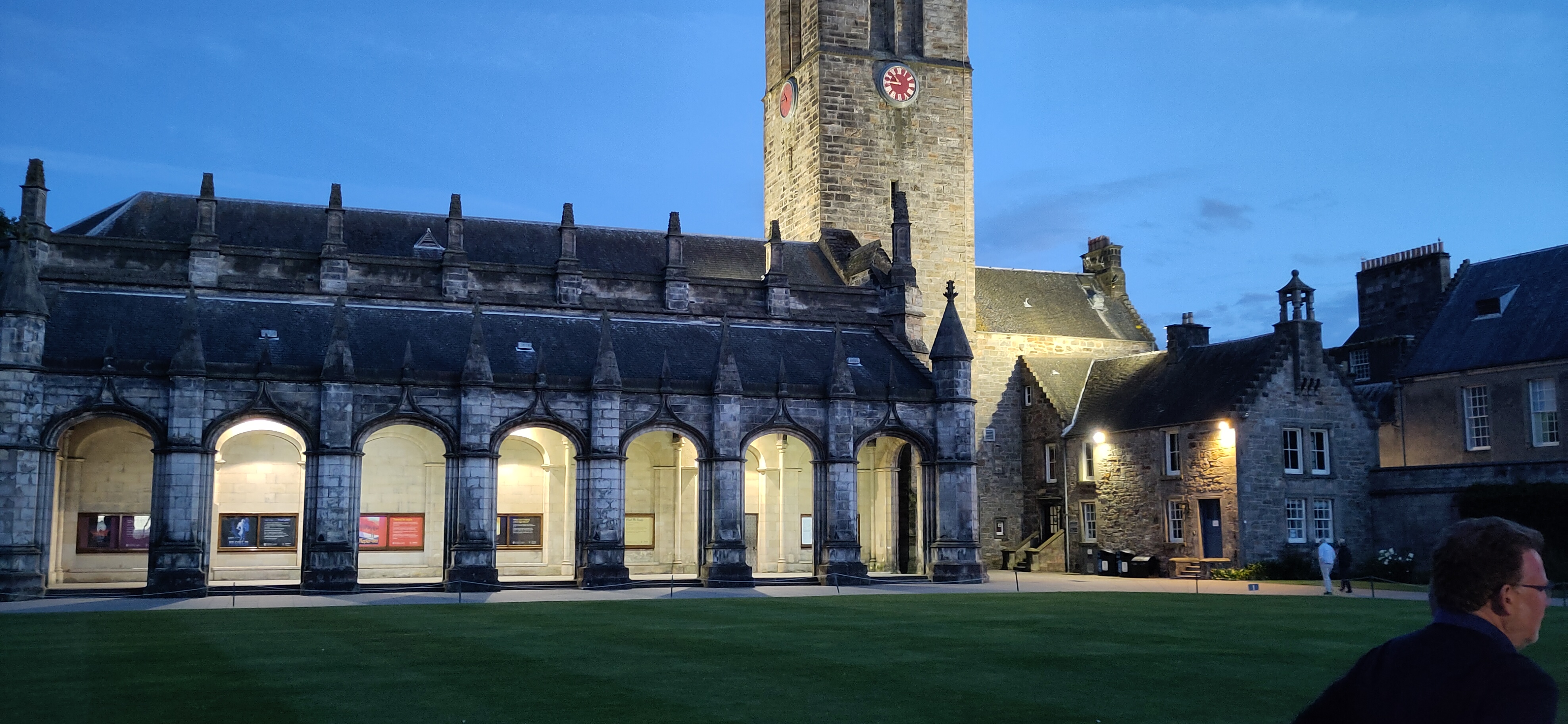
On 7 July, I packed my bags again to head for conference, this time to the beautiful venue of St Andrews

I chose the wonderful Caledonian Sleeper as a stress free ride up to Edinburgh, arriving refreshed on Monday morning in good time for the conference kickoff.

The train journey from Edinburgh to Leuchars is stunning, with myriad coastal views looking particularly impressive in the sunshine (less so on the way back when it was raining, but still with its own grandeur).

St Andrews doesn’t actually have a train station, but the bus service from Leuchars is frequent, quick and reliable. The conference venue, Youngers Hall, is about 10 minutes walk from the bus station, allowing me to familiarise myself with the town, which is very picturesque and historic and conveniently small (like Cambridge – or maybe Durham – in miniature). I got a coffee from ‘Taste’ which bears a plaque stating that this was the place that ‘Kate dumped Will’ (another thing ‘The Crown’ got wrong?). On the second day, I went for an early morning run on ‘West Sands’ (the place where ‘Chariots of Fire’ was apparently filmed – I can confidently state that my pace was some way off the fabled 4 minute mile).

But I am getting ahead of myself. In any case, I wasn’t just there to sightsee. ESLTIS is a conference specifically for teaching focussed academics, and (importantly) those who are supporting and leading educational change, like learning support teams and academic developers. Like most conferences, there were parallel streams, so what follows is a very partial account of what I saw and what resonated most with me.

The conference started with a keynote from Clare Peddie (VP Education at St Andrews). She described the journey at St Andrews to give teaching focussed academics a defined career path (I noted considerable similarities with what has happened at Bath). At the end of the conference, Sam Nolan (Director of Durham University’s Centre for Academic Development) took up that theme and added further insights. Some points I took  from both of them:

  • We have come a long way – in 1991, there was no mention of pedagogy in the national conference of university professors.
  • Now there are a significant number of academics promoted on the learning and teaching route (in St Andrews, Durham, Bath and doubtless many other institutions).
    • However this hasn’t lead to as much gender balancing in the higher level roles as Clare was hoping.
    • Once interesting idea (from Sam) is to oblige staff to apply for promotion on a bi-annual basis (tied into the annual appraisal). This has made a big difference in the more balanced representation of those that get promoted (countering the tendency that the demographics of those who apply for promotion is non-representative). 
  • Other developments include CPD/PGCAPP (presumably including support for HEA accreditation and NTF), education development leave, and mentoring.
  • Both Sam and Clare stressed the importance of mentors (which also echoes my own experience, as well as advice I have heard elsewhere). There was some discussion on mentors vs coaches, and the importance of listening, and context specific advice.
    • I was delighted to learn that we are planning to set up a mentoring network within ELSTIS.
  • Context informs action, and context defines impact. Context can also constrain the scope of change – but Sam pointed out that scope is somewhat elastic.

I noticed just about in time that there was a workshop on New Model Institute for Technology & Engineering (NMITE) from Gary Wood and Bertie Knight. As part of my work with the new Centre for Excellence in Engineering & Design Education (CEEDE) at Bath, NMITE is very much on my agenda as a model to explore. NMITE is a new ‘challenger’ university offering a distinctive engineering education. Some key differences from traditional universities include: no requirements for Maths/Physics A level; integrated engineering (ie rather than discipline specific eg  mechanical/electrical); students ‘own’ their own space for the whole of a module (8 weeks); no lectures (studio based education) – and very team based; no exams; accelerated (3 years rather than 4 – shorter summer holidays). I liked the idea of free team breakfasts (for the students) which built team camaraderie and dynamics. I had a good chat with Gary afterwards covering various other aspects of NMITE and comparing it to other institutions like Dyson, The Engineering and Design Institute (TEDi) and The London Interdisciplinary School (LIS).

Other themes explored from a variety of interesting talks including

  • Intrinsic motivation (Anna Smith from St Andrews gave a good talk on this). Are we harming students learning through an over focus on grading? Anna made a good point that maybe we need to be clearer on exactly what we want to assess. Alessio Iannetti noted that optional module choice was sometimes driven by genuine interest but sometimes (typically later in the degree) by explicit factors like perceived difficulty. Nobody explicitly mentioned growth mindset, but it was strongly hinted at. Also no one mentioned ungrading, which I was a bit surprised at. Perhaps I missed it.
  • Group teaching. I perceived a general trend to have longer lasting teams which is consonant with the Team Based Learning principle of ‘permanent’ teams allowing the full team development lifecycle.
  • Lots of active learning examples, including for example changing dry ‘research methods’ courses to project based learning, with interdisciplinary teams. Liwei Guo and Mary Abed Al Ahad both had valuable practice to share.
  •  Quite a lot of work on impact, including Simmons use of the 4M framework (micro, meso, macro and mega) impact. This is linked, sometime explicitly, to career progression pathways.
  • Also a focus on ‘change is the only constant’ – as Heraclitus noted a little while ago.
  • One interesting stat from the OU. Over the last decade (if I scribbled this down correctly) we have increased student numbers by 400K and academic staff numbers by 20K (as a sector). While this has increased staff student ratio slightly (from around 12:1 to around 13:1 if my maths is right), what is interesting to me is that the net rise in staff numbers is apparently almost entirely down to teaching focussed staff. 
  • Some discussion on the politics on internationalisation. Given that many Universities are financially dependent on international student recruitment, there is attention paid to the risk of this ‘pipeline’ drying up. Robbie Watt pointed out that the language used around this is often discriminatory, and we had a good discussion on the student experience of international students – tying into the recurring theme of listening to (and partnering with) students.
  • A few talks (unsurprisingly) on generative AI (genAI), and how people are using this. It reinforces my view that we need to help students to use genAI effectively. One idea I am planning next year is to get students to use AI with a topic they are already expert in (eg Manchester United, Taylor Swift, the MCU and probably numerous other more topical references). That way students can see where the output of genAI is both useful but also sometimes incomplete, shallow, misleading or just wrong. Alessio Iannetti had a similar approach, using a diabetes scenario that his students were familiar with.

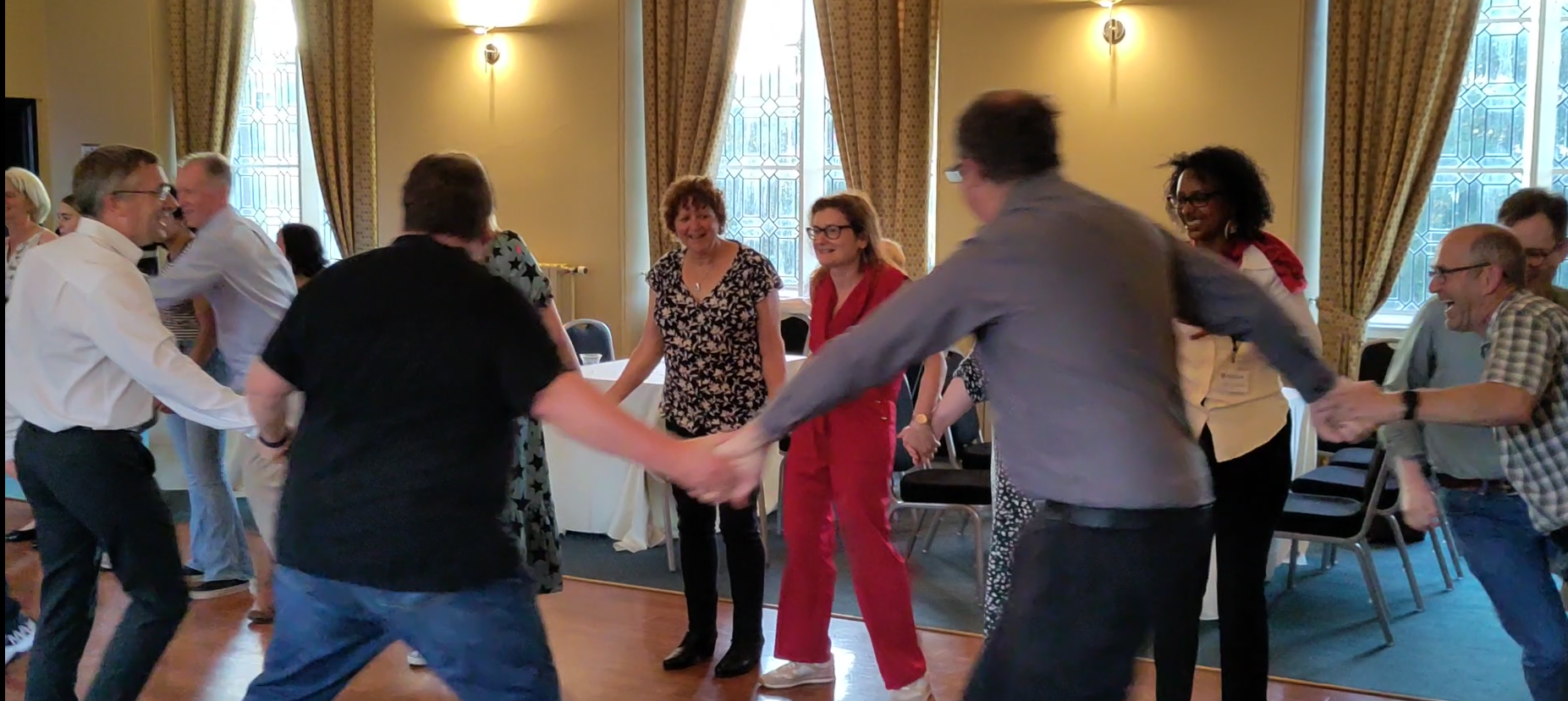
Overall, it was great to see ESLTIS starting up again after being laid low by the pandemic for a couple of years. It’s a vibrant community and I think we will continue to see it growing as a flagship event for those driving educational innovation and support in the sector. Oh, and *of course* there was  a Ceilidh!

Posted in teaching | Tagged , , , , | Leave a comment

EAUC Conference – Embedding Sustainability in Higher & Further Education

At the end of June 2024 I went to the wonderful EAUC conference in Winchester.

The conference started well with an ‘SDG summit game’ run by the inspirational Simon Kemp. The purpose of the game was to get participants to take the part of different countries representing their relevant SDG interests. As a happy side effect, there was also a lot of effective networking between participants – from my side, this was just the start of conversations with many others doing excellent work embedding sustainability and climate into university education.

The conference proper started with a whistle stop tour by Charlotte Bonner round the new EAUC strategy: “A post 16 education system that creates a world with sustainability at its heart”. A whole series of fantastic workshops followed – what follows is just a small selection of insights that particularly struck me.

  • In a discussion on green skills, Lou Mycroft brought in the idea of Spinoza’s potentia, a type of power that arises from ‘joyful connection’ and is a survival energy that characterises green changemakers.  Also a mantra that has stayed with me :  ‘embody, not just embed’.
  • After a thought provoking roundtable discussion on AI, I caught up with Helen Nicholson from JISC, and chatted about the potential of AI for embedding sustainability in courses. I am going to explore whether it might be a useful tool for those that struggle to see the link between sustainability and their topic, or want some simple ways to get started.
  • Incidentally, on this topic, there are some fantastic resources available from various institutions including the Sustainability Hub, an open resource toolkit from the OU.
  • Catherine Heinemeyer from York St John’s described a ‘people’s assembly’ approach to defining a new food policy, with evidence heard from students, the head chef, those with dietary needs, climate activists and other key stakeholders.  
  • Simon Kemp, Jamie Agombar (SOS-UK), Victoria Hands (Open University), Jo Chamberlain (Exeter) and Danielle Arbeiter (City University) described working with the PSRBs to build sustainability into Subject Benchmark Statements. They had done a great job to bring key actors (including CEOs of the PSRBs) together in Windsor Castle to work out a way forward. When thinking about a complex system, it’s important to identify points of leverage and this is one such point. As Simon points out the PSRBs can actually mandate what is taught.
  • Finally, 2 inspirational keynotes bookending the conference. Judy Ling Wong talked about the ‘head, heart, hands’ model (familiar to me through Climate Fresk) and the importance of relevance (and hence representation) in bringing about engagement. Climate Reframe looks a particularly good resource for increasing representation (ie answering the question: how do I find an under represented voice?).  Meanwhile Todd Smith (co founder of Safe Landing) gave some familiar facts about the impact of air travel; but through a different lens. Firstly, air travel globally is still a minority sport (80% globally have never flown). Secondly, ‘flying less’ can be focussed not on the occasional holiday maker but instead on frequent flying, first class and corporate jets – together with a tax on aviation fuel, the revenues can be used to subsidize greener travel, especially trains. Most crucially, being an ex airline pilot, Todd is well aware of the benefits of the air travel, and the excitement and pride of those who work in the industry. Therefore the message of Safe Landing is not to destroy the airline industry, but rather to save it – securing a truly sustainable future for air travel. I interpret Todd as saying: We don’t want to stop flying, but we want to find a way to do so fairly and within environmental limits. Which means ‘flying less’ now so that we can continue to fly in the future.

All in all, the conference was a great opportunity to connect, share, and recharge, including a couple of early morning runs.

I have left with a whole bunch of new ideas and resources, an expanded network of colleagues and peers, and a list of actions and next steps. Now the challenge is to turn all this into impact – perhaps something to bring to EAUC 2025.

Posted in innovation, sustainability, teaching | Tagged , , | Leave a comment

Research in Distance Education (RIDE) conference 2023

As part of a continuing journey to improve my hybrid teaching, I paid a visit to London to attend (and present at) the Research in Distance Education (RIDE) conference. I was particularly interested in team working, peer learning and community, so my notes reflect that.

Continue reading
Posted in blended learning, team based learning | Tagged , , , | Leave a comment

TBLC Annual Meeting 2023

Some notes on the Team Based Learning Collaborative (TBLC) Annual Meeting 2023 – mostly of interest to the TBL community.

Continue reading
Posted in Uncategorized | Tagged , | Leave a comment

Hyflex and Team Based Learning – in practice

Back in August, I blogged about my plans to combine Hyflex with Team Based Learning. Well, I’v now done this for a semester and here I report on my experiences – the good, the bad and the ugly! If you are time pressed, just jump to the ‘lessons’ where I provide some hints and tips based on my experiences.

Continue reading
Posted in Uncategorized | Leave a comment

Hyflex and Team Based Learning

The 2020-21 academic year has been a year of challenge, but also opportunity; to try new teaching approaches that combine the best of in-person and online modalities. In this blog I report on my thoughts about how to continue this journey of innovation, with the ultimate aim of delivering authentic Team Based Learning in a fully Hyflex mode.

Continue reading
Posted in blended learning, innovation, teaching, team based learning | 1 Comment

From here to there… reflections on a semester of the #bathblend

Along with the rest of the UK educational community, I have ensured that my courses @UniOfBath are Covid-ready. This means designing them according to the Bath Blend which includes independent (self paced) learning, Live Online Interactive Learning (LOIL) and In Person Time (IPT). In this blog I reflect on what has worked well (and less well) and what I would like to keep in the ‘new normal’. In short, my thoughts on how to design the blended experience in a social and inclusive way, while sharing best practice.  I hope this might be of use to other educators and I’d be keen to hear about your experiences too (leave a comment or pingback to your own blog).

Continue reading
Posted in blended learning, innovation, teaching, team based learning | Tagged , , , , , , | 5 Comments

@UniOfBath students solve #brexit … again

Last year, I published a blog called, somewhat tongue in cheek, Team Based Learning solves Brexit This year, as the #brexit negotiations go the wire, I took the (last?) opportunity to use Brexit as a case study in #gametheory.

Caveat – I do not claim any special insights on Brexit, nor indeed Game Theory. This is blog is not intended to be political, or partisan. It’s chiefly about the application of #teambasedlearning in an online context. If that interests you, read on..

Continue reading
Posted in teaching, team based learning | Tagged , , | 1 Comment

Team Based Learning online – some reflections

Like many of those in Higher Education, I have moved my teaching online. Since my sessions involve highly interactive team work and very little ‘lecturing’ this had proved a challenge. In this blog I present some reflections and learnings from my experience, in the hope it might be useful to others. My reflections cover; using the technology, team teaching, facilitating the session – and my key learning it takes longer than you think!

Continue reading
Posted in innovation, teaching, team based learning | Leave a comment